
How to manage screen time for under-5s
From watching smart TVs to seeing family members using devices, many children aged 5 and under are already experiencing screen time in some way.
Use this guide to help your child develop good screen time habits that support them as they grow.

In this guide
- Quick tips for parents
- How much screen time should under-5s have?
- What does ‘good’ screen time look like?
- How to find appropriate content for under-5s
- How does screen time affect young children?
- How do I delay access to screens?
- Other FAQs
- Supporting resources
Quick tips for parents
The UK Government, along with experts in early childhood, recommend that children under 2 should not have any screen time. Children aged 2-5, they say, shouldn’t have more than 1 hour per day. This guidance is based on expert insight and research.
This guidance is a good place to start when thinking about screen time. However, a lot of parents face many pressures and stresses that might lead to more screen time.
Do what you can to limit screen time for under-5s. But if they do spend more than the recommendation, make sure the content supports their development.
Before your child uses a device, including watching a smart TV, set screen time limits. Doing this helps to ensure your child takes regular breaks and gets moving.
You can set screen time limits directly on their device if available. Apple Family Sharing for iOS and Google Family Link for Android are great choices. You can also simply set timers on your own device or on a smart speaker to help remind you.
Consider setting time aside to spend your child’s screen time together. For example, if they’re watching a 10 minute episode of their favourite show, watch with them. Ask them questions about what’s happening to reinforce their learning. You can also comment on things that happen to help them recognise cause and effect.
Doing this can help make screen time an active experience that supports their development.
‘Appropriate’ can mean a lot of things. First, consider whether the content is appropriate for your child’s age. You can do this by watching/playing it yourself, looking at BBFC/PEGI ratings or seeing what other parents say.
Second, consider whether the content is appropriate for your child’s development. Prioritise slow-paced content that is repetitive and calm. The Kids’ Slow Media Project can help you find video content which supports your child’s development. CBeebies is a good source for developmentally appropriate games as well.
How much screen time should under-5s have?
Firstly, it’s important to remember that not all screen time is created equal. Some apps, games and videos are more developmentally appropriate than others.
As well as this, how your child consumes content makes a huge difference. For example, passive watching has fewer benefits than active learning.
UK Government guidance
In 2026, the UK Government announced the following recommendations for screen time in under-5s:
- under 2s: no screen time, except for shared family activities which ‘encourage bonding, interaction and conversation’.
- 2 to 5: maximum 1 hour; less if possible.
This guidance is based in research and is continuing to develop.
World Health Organisation (WHO)
The WHO also offers the following guidance related specifically to physical movement and exercise:
- under 1s: screen time is not recommended; children shouldn’t spend more than 1 hour in one position.
- 1-year-olds: sedentary screen time (such as watching a TV show) is not recommended.
- 2 to 4s: no more than 1 hour of screen time per day, though less is better.
This guidance was shared in 2019 and focuses on movement, development and sleep.
What does ‘good’ screen time look like?
If your child uses a smart TV, tablet or any other device, it’s important to consider what they access on those devices. Fast-paced, loud and exciting content might hold their attention, but it is unlikely to support development.
Children under 2
If your child is under 2 years of age, try to limit screen time to activities which encourage bonding, interaction and conversation such as a video calls with family.
Lauren Seager-Smith, CEO at For Baby’s Sake Trust, advises prioritising development. Positive and responsive relationships with parents can help babies and young children develop critical communication and connection skills.
Encouraging play, interaction and a good amount of sleep is key. If you’re using tech at this age, try to think about how it’s supporting your child’s skills and development.
Children aged 2 to 5
Try to stick within the recommended 1 hour of screen time or less per day at this age. It’s also best if that 1 hour is split up with regular breaks throughout the day.
At this age, children are developing key skills to support them as they grow. As such, focus their screen time around how it supports these skills. Many forms of content can help children learn letter and number recognition, problem-solving and even conflict resolution.
Choose content which is slow-paced, repetitive and easy to follow. Some content which is age-appropriate is not necessarily developmentally-appropriate.
For example, Sesame Street is a popular series for young children. However, the Slow Media Project only gives the content on its YouTube channel a 14/20 rating. It gets marked down for a ‘high load’ of sensory input and too few natural pause points between scenes.
You can use the Slow Media Project to help find video content, but it’s best to also test content yourself before giving your child full access.
How to find appropriate content for under-5s
If you feel overwhelmed by everything that’s out there, you’re not alone. Apps, games and videos get released daily, which claim to be for children in this age group. Often, the most popular content isn’t the most appropriate.
The following are some resources you can use to find content which is age-appropriate. Some will also support young children’s development. Ensure you look into any new content you wish to share with your child before giving them access.



How does screen time affect young children?
Experts and research outline the following risks for screen use by young children:
- Too much sedentary screen time use can lead to health issues in the future, such as obesity.
- Research found links between prolonged screen use and language issues. Additionally, background television in infancy also suggested language delays as children grew.
- Other studies reported that exposure to multiple media forms was linked to less focused attention in toddlers. The ability to focus their attention is through to be a key part of development for toddlers to support executive function abilities as they grow.
- Excessive screen time also has links to lower vocabulary and grammar scores.
Some research also outlines the following potential benefits for young children:
- Quality screen media can help 2-4-year-olds develop early language and literacy as well as play.
- Good quality programmes via TV or streaming services can also support cognitive development.
- Apps that teach young children to read can also support early literacy development.
- Connecting through video calls also gives children the opportunity to learn and socialise when meeting in person is not possible.
What are the signs of poor screen time balance?
It’s important to look out for signs of too much screen time in under-5s. This can include:
- Overstimulation that takes the shape of aggression, bouts of crying and an inability to sit still.
- Preferring screen time use over interacting with others or doing other activities.
- Feeling anxious or stressed about not having their device or while using their device.
How do I delay access to screens?
If you feel pressured to give your child a device, you’re not alone. Whether it’s dealing with the pressure of daily life or judgement from others when your child is fussing in public, giving your child a screen sometimes seems like the only choice.
But if you are trying to delay access as much as possible, you can. ‘Start as you mean to go on,’ says For Baby’s Sake Trust CEO Lauren Seager-Smith. ‘Although [screens] can be a fix in the moment, it’s very hard to change once you open that door.’
Use the following tips to help delay screen time access for your child.
If your child is regularly attending nursery or another early years setting, ask them how they use devices. Is it watching a short episode of something? To support wider learning? Another reason?
This can help you make more confident decisions around your child’s screen time at home. As Government guidance advises no more than 1 hour of screen time per day for 2-5s, this might make decisions easier for you at home.
While your child might be upset, explaining your reasoning early on can help them understand. ‘You already had 20 minutes of screen time at nursery today. Your brain and eyes need a break. Let’s do [activity] instead.’
Boredom might seem like a negative thing to some, but it’s actually a really important part of childhood development. Replacing boredom with screens can teach children that they always need to be stimulated.
However, boredom can help your child learn to manage frustration and problem-solve to find creative ways to stop their boredom. You might find them creating interesting stories with their toys, creating new games or playing make believe.
You don’t need to structure every minute of your child’s day. It’s okay to set them up with their toys and let them play while you do other tasks and simply keep an eye out.
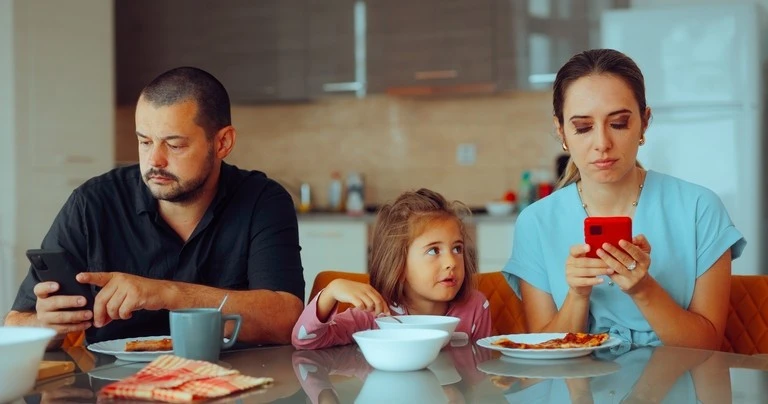
Young children learn a lot by watching those around them, including when it comes to screen time. If you or the family are on devices around them, they will also want to be on devices. Not having the same access as their parents or an older sibling can lead to tantrums as they try to understand these differences.
If you have older children, talking to them about only using devices in certain spaces and out of sight can help. You could designate zones in your home where screens cannot be used, such as where your child under 5 plays.
If you do need to use your device to make a call, respond to a message or find out information, narrate your actions. E.g. ‘I need to let Grandad know what time we’re coming over tomorrow’. As soon as the action you narrated is done, put your device out of sight.
Other FAQs
The below are more frequently asked questions around screen time for under 5s. Explore the responses and guidance below.
This will vary between families. If your family already watches TV or films together, or if you use devices around your child, they are already introduced. They might also experience some form of screen time at nursery.
You can set boundaries around further screen use though. Create screen-free zones, limit the use of devices in front of your child and talk to Nursery about their own screen time limits. As your child heads into primary school, they are likely to start using devices more regularly.
Talk to your child’s early years or primary school setting for more support.
Play and conversations are vital to a child’s development. Talk with them about their activities or things they might see when you’re out in public. Ask them questions and get them to think about the world around them. Reading together can also be a great activity during waiting times such as on the train or in a waiting room.
At home, let them play with their toys in an unstructured way. Allow them to figure out where their play leads. Stay calm if they are melting down because they want their device. Explain that it’s time for play with toys, and they can either play on their own or play something with you.
Making a change to screen time at any age is difficult. For under 5s, it can be a lot harder for them to understand choices and to regulate their emotions. You will likely face some tantrums, but being prepared for that can make the transition easier.
Start with small changes rather than taking devices away all at once. Maybe that looks like stopping your own use of devices to model what you want. Next, you could lessen the frequency or length of screen time by setting timers.
Try to replace screen time with other fun activities to make the change easier as well.
Gradually make these small changes until you’re where you want to be. Take your time, explain your reasons and stay consistent.
At this age, the reasons behind a meltdown can sometimes feel like a mystery. The cause might not always be what you think it is. Understand that taking a stimulating device away from a child will upset them, and be prepared.
Stay calm and try to get your child in the habit of taking deep breaths when they’re upset. Once they’re calm, encourage them to say the emotion they’re feeling. Ask them why and explain why screen time is done.
Transitions can also sometimes be made easier by using visual timers such as these sensory timers. Instead of relying on a countdown, your child can see that the screen will soon be completely green (for example), which means device time is over. That helps their brain predict what comes next, which can help limit meltdowns.
Supporting resources
How do my screen time habits impact my child?
How do I choose the right content for a child under 5?

Should I use screen time as a reward?

Setting devices up for safety (ages 5 & under)

Safe games guide for under 5s
 Close video
Close video
Close video
Close video
Close video
Close video
Close video
Close video
Close video